Meet Tavneet, a Math Educator based in Nova Scotia, who takes us on her journey through delegacy!
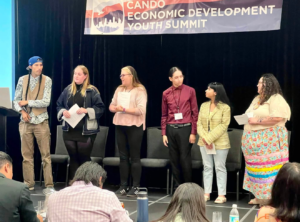
This summer, I had the opportunity to travel from Nova Scotia to Alberta as a delegate at Cando’s 9th Annual Economic Development Youth Summit (EDYS), held from August 17-20, 2026. I went into the Summit expecting to learn more about economic development and land management, but I left with a much deeper understanding of how closely our communities, economies, cultures, and environments are connected.
My journey to this opportunity also reflects what YES has meant to me. Through the YES program, I have had the opportunity to learn about so many different initiatives, projects, organizations, and possibilities happening across Canada. Not every opportunity I have learned about through YES has been directly connected to my own work or studies, but seeing the range of things young people are doing has been incredibly motivating. It has encouraged me to keep saying yes- to experiences that challenge me, introduce me to new people, and help me see possibilities that I may not have considered before.
One of those opportunities came through my involvement with X Helping Hands Association, a community organization I founded in Nova Scotia as an initive in 2022 while being a student at StFX. Through this work and the experiences I have had as a young community leader, I was selected to participate in Cando’s EDYS. The opportunity allowed me to travel from Atlantic Canada to Alberta and connect with young people, professionals, community leaders, and mentors from across the country.
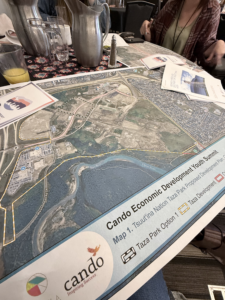
Throughout the Summit, I learned about land management, community planning, economic development, and the importance of making decisions that consider both present and future generations. One of my biggest takeaways was that development cannot be separated from the land on which it takes place. The health of our communities depends on the health of our environment, and decisions about land use can have impacts that last far beyond a single project or generation.
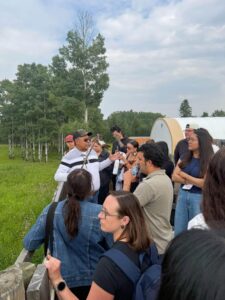
The cultural experience at Tsuut’ina Nation was particularly meaningful. Spending time learning about the community and its relationship with the land gave me an opportunity to think differently about responsible development. It reminded me that land is not simply a resource to be developed or managed. It can hold cultural, historical, spiritual, and community significance. Meaningful economic development therefore needs to recognize these relationships and ensure that communities have a voice in decisions affecting their lands.
The Summit also gave me an opportunity to work collaboratively with young people from across Canada. Our group worked on a case study that required us to think critically about land use and economic development while considering different perspectives. Working with people I had only just met was challenging at times, but it taught me the value of listening, adapting, and making space for different ideas. I learned that complex community issues rarely have one simple answer.
Coming from rural Nova Scotia, I found myself constantly connecting these conversations back to home. Rural communities are deeply connected to their land and natural environments while also facing questions about economic opportunities, population growth, resource use, and sustainability. The Summit encouraged me to think about how we can support economic development while protecting the environments, cultures, and relationships that make communities unique.
The support I have received through YES has also helped make experiences like this feel possible. Beyond any one specific opportunity, YES has helped me become more aware of the many ways young people can participate, lead, learn, and contribute. It has motivated me to keep looking beyond what is immediately in front of me and to be open to opportunities that might take me somewhere completely unexpected- sometimes literally, from Nova Scotia all the way to Alberta.
Looking back, one of the most valuable things I brought home was not a single answer, but a different way of asking questions: Who benefits? Who is affected? What happens to the land? Whose knowledge and voices are being included? And what will this decision mean for future generations?
I travelled to Alberta to learn about economic development, but I came home thinking much more deeply about land, environmental responsibility, culture, and community. I am grateful to YES for helping create a space where young people can discover opportunities, learn from one another, and be encouraged to keep saying yes. I am also grateful to Cando and everyone who made EDYS 2026 possible.
For me, this experience is another reminder that saying yes can open doors you never expected- and sometimes those doors lead you across the country, introduce you to an entirely new community, and change the way you see the work you want to do in the future.